SUMMARY
PREVALENCE: Common
ACTIVE PERIOD: Active at night
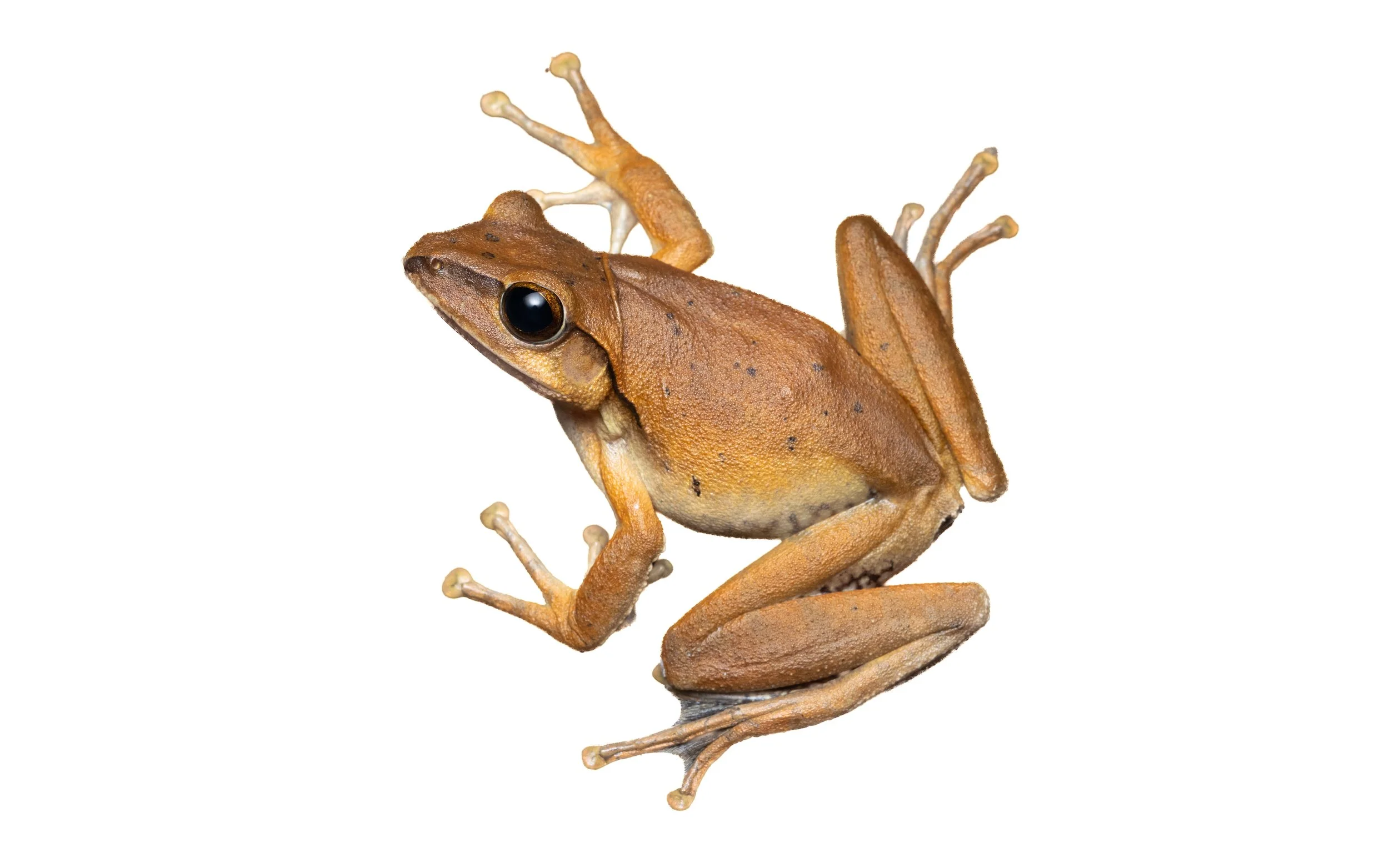
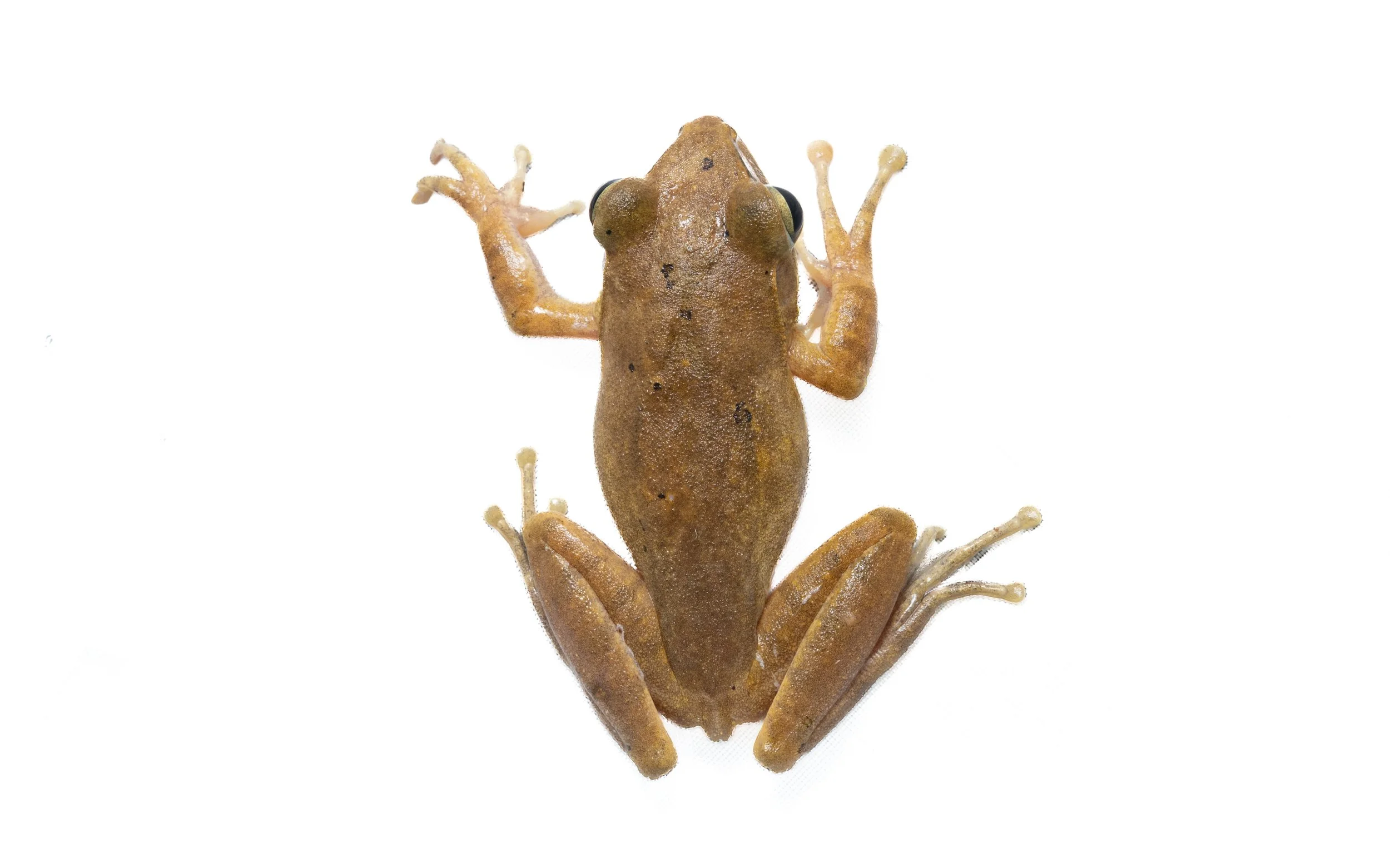
KEY ID FEATURES: Regularly found in trees, brown to orange body, large toe pads
SIZE: ~5-7cm (males/females)
IUCN: LC - Least Concern

GALLERY
IMPORTANT: Many frogs have significant variance in coloration and pattern even within the same species. There can also be extreme differences in appearance from juveniles to adults and some species appear very similar in maturity.
DESCRIPTION
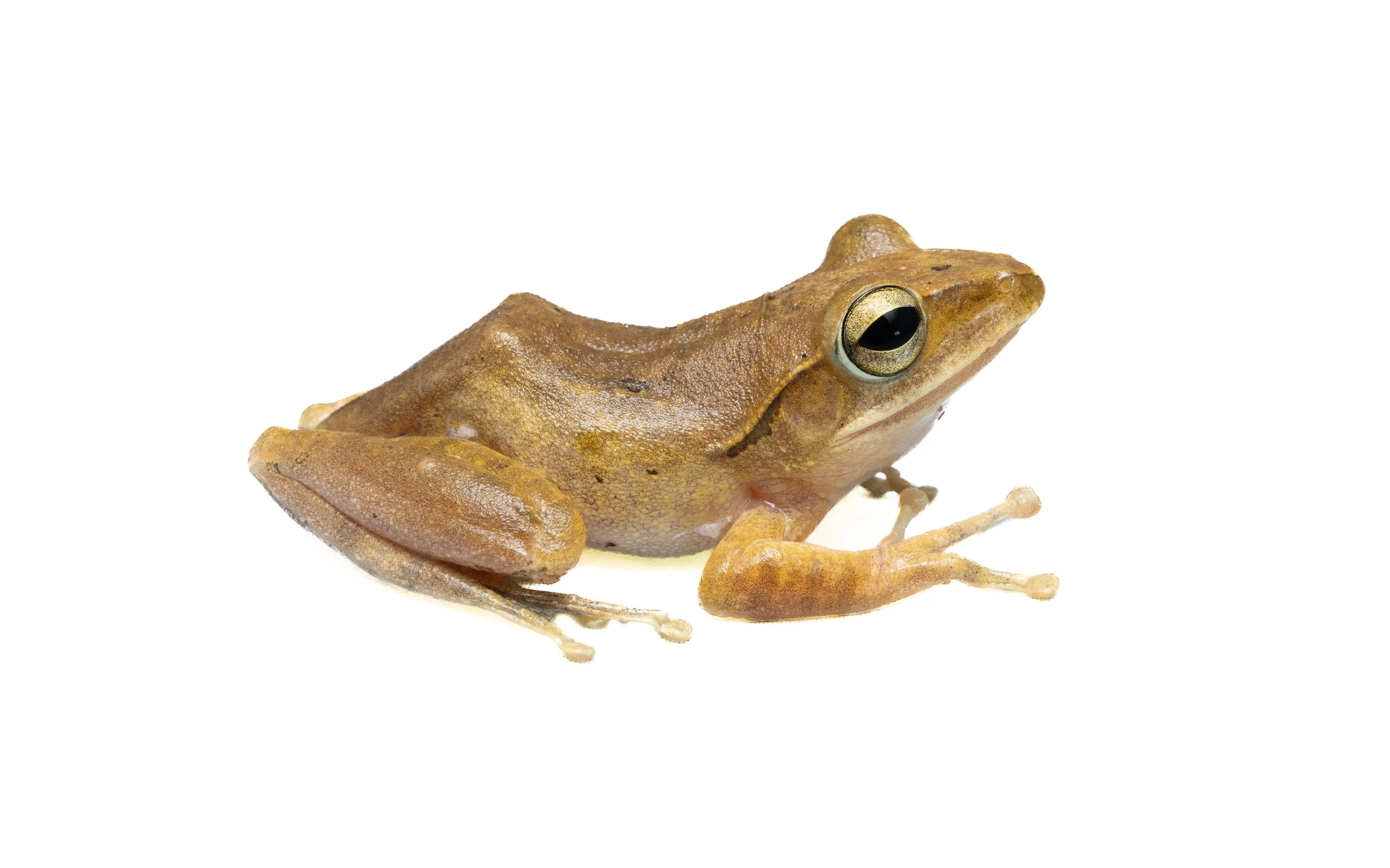
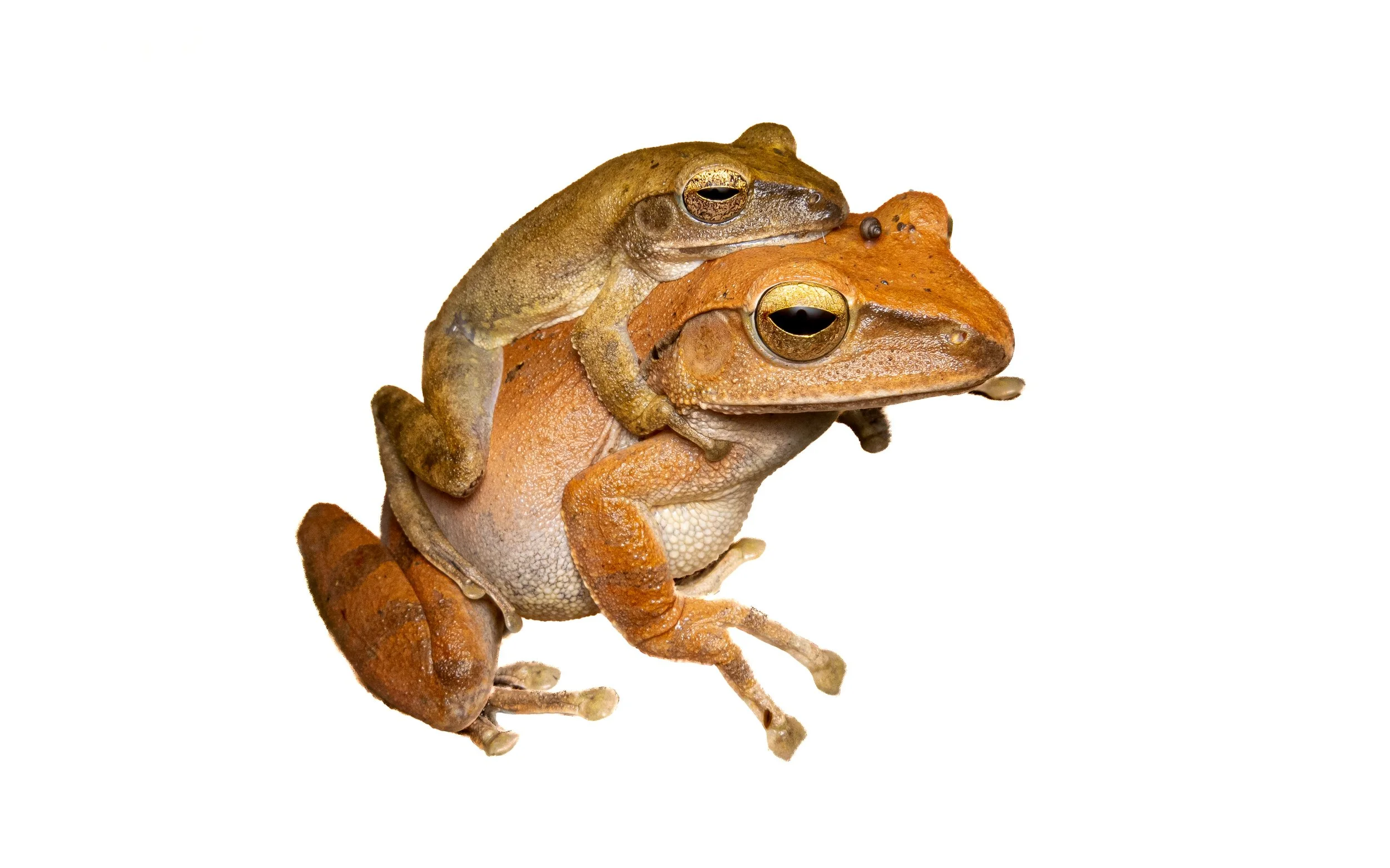
Brown tree frogs range in color from yellow to brown, red to orange and several variations in between. They can appear pattern free or in some cases with highly prominent “x” markings on their backs and occasionally with dark bands on the fore and hindlimbs. Their heads are flat with pointed snouts, wider than the body in males and equal to or slightly more narrow than the body in females. A bony ridge runs from the middle front of each eye to the nostril. The face is darker than the dorsum coloration between this ridge and the lip. The tympanum is obvious, located behind and slightly below each eye and bordered above by and obvious skin fold. The back of each forelimb has a line of connected tubercles that appear like a jagged skin flap and breaks up the frogs profile when sitting stationary with limbs puled in. The skin is covered in small granules and appears smooth from a distance and evenly textured up close.
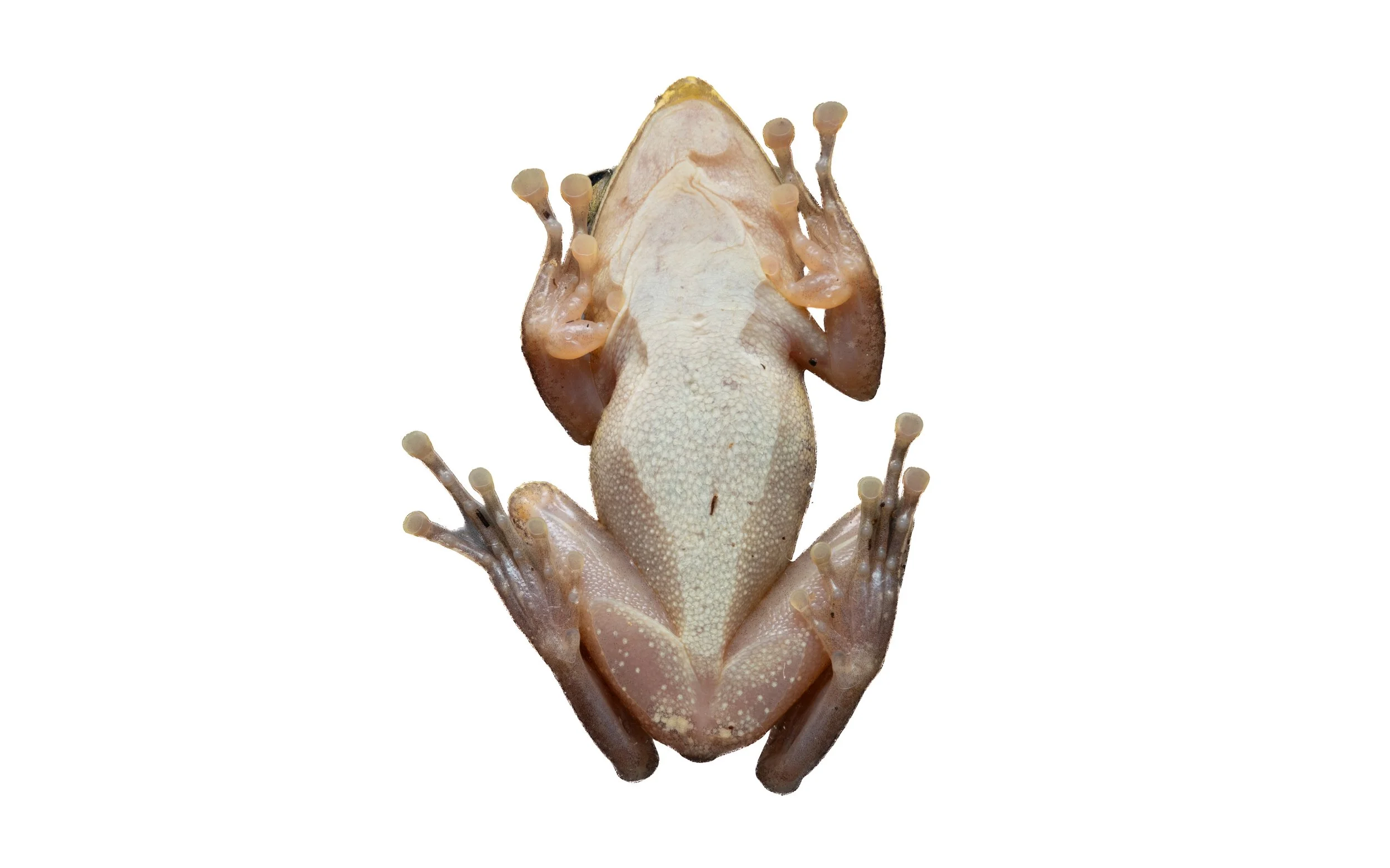
The venter is white to light yellow under the chin and on the chest. Stomach consists of densely packed light yellow or white spots creating the appearance of a solid white or light yellow color, that transition to densely packed granules toward the cloaca. The skin on the ventral side of the limbs is opaque.
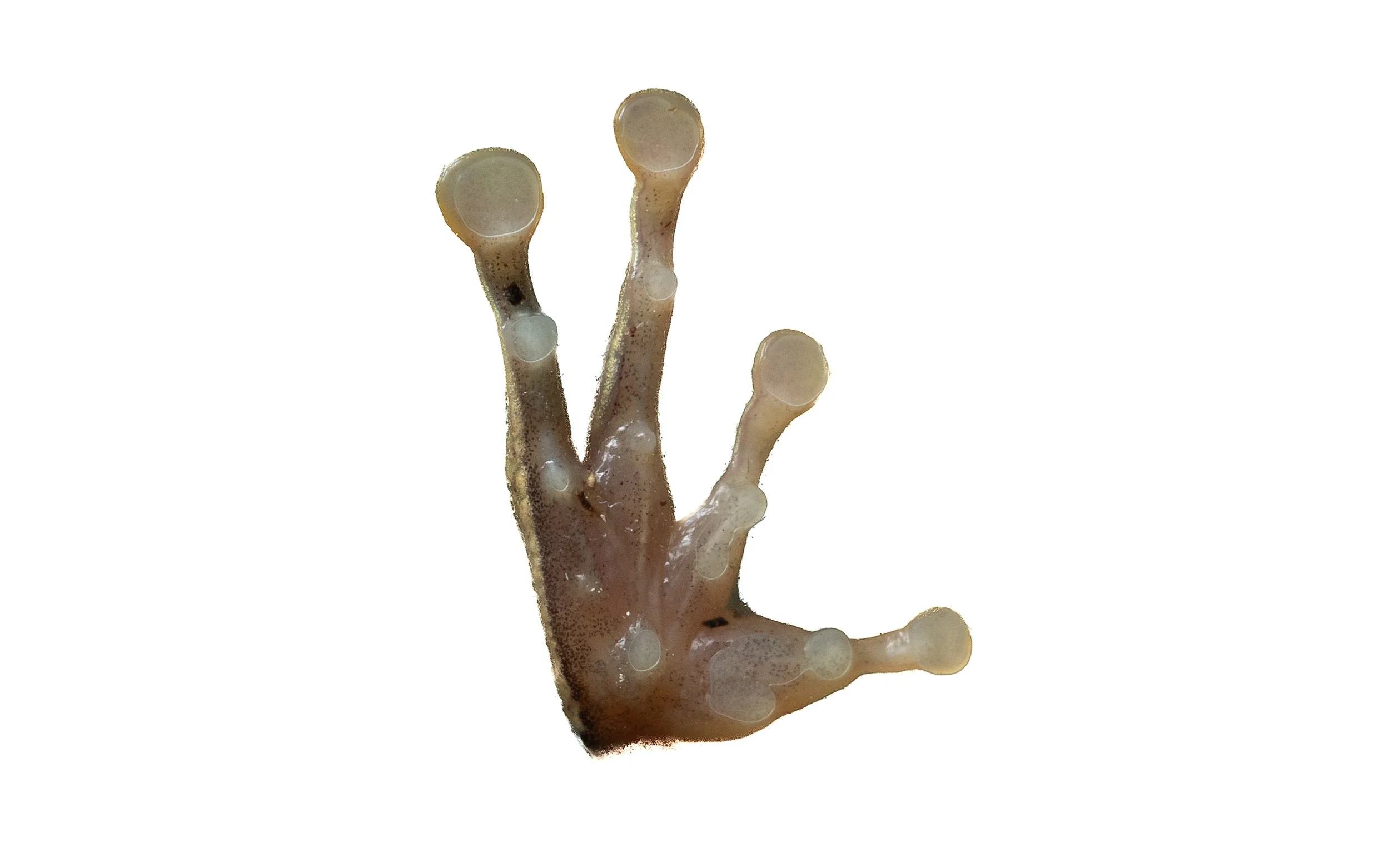
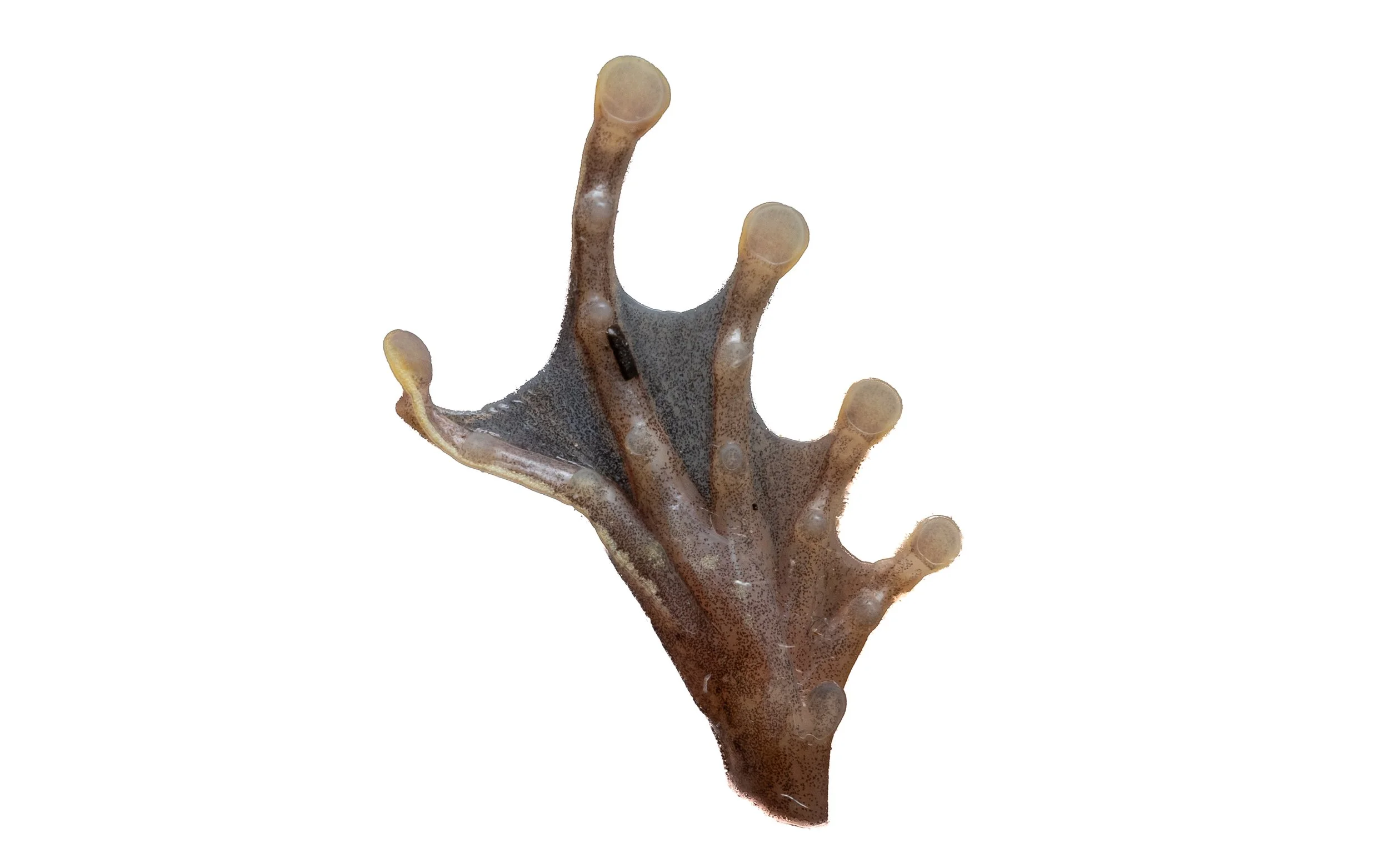
They have four digits on the forelimbs with no webbing present and enlarged toe pads. Hindlimbs have five digits and toe pads that are slightly smaller than those on the forelimbs. Digits on the hind limbs are partially webbed.
They are sexually dimorphic with females larger than males.
HABITAT
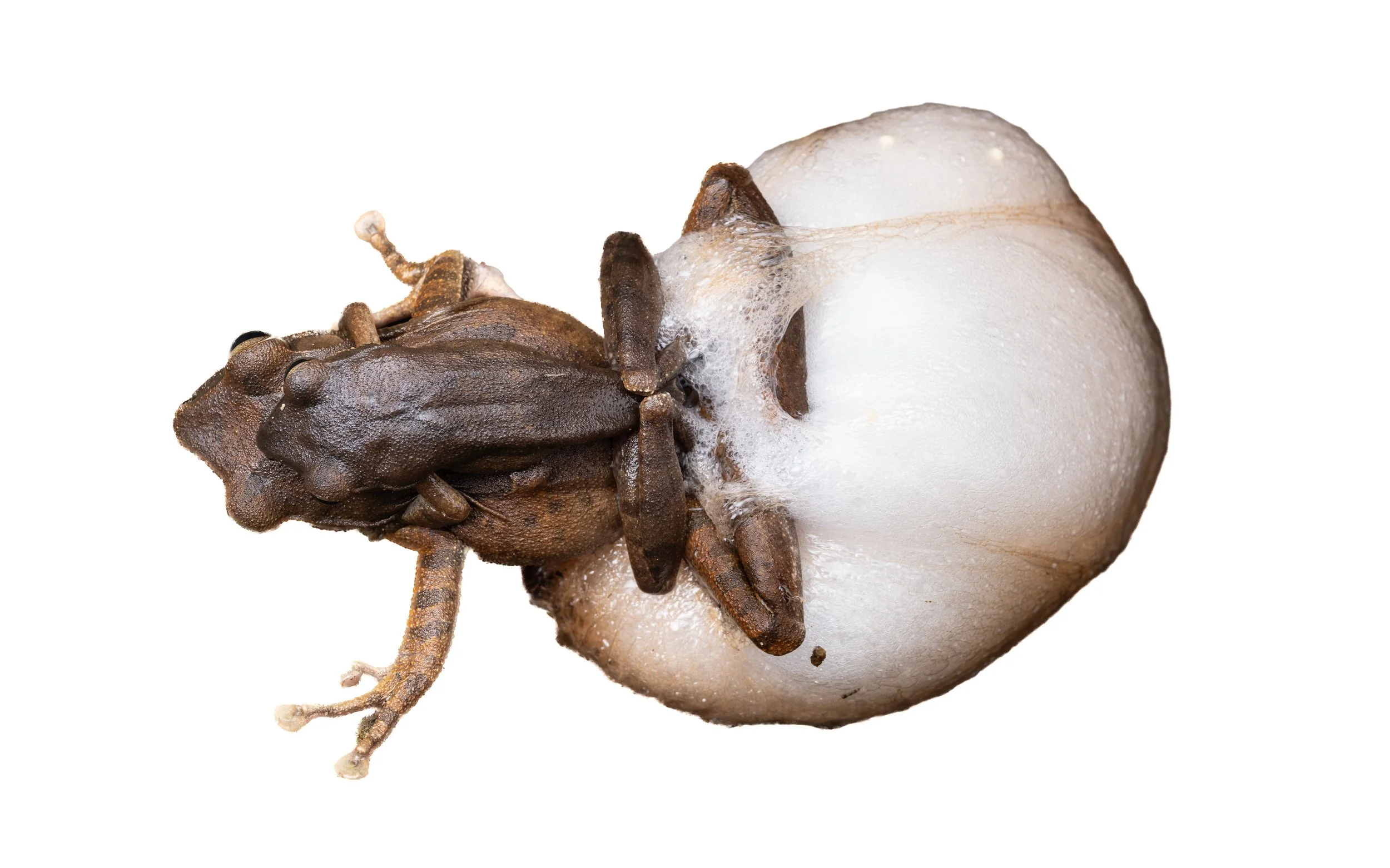
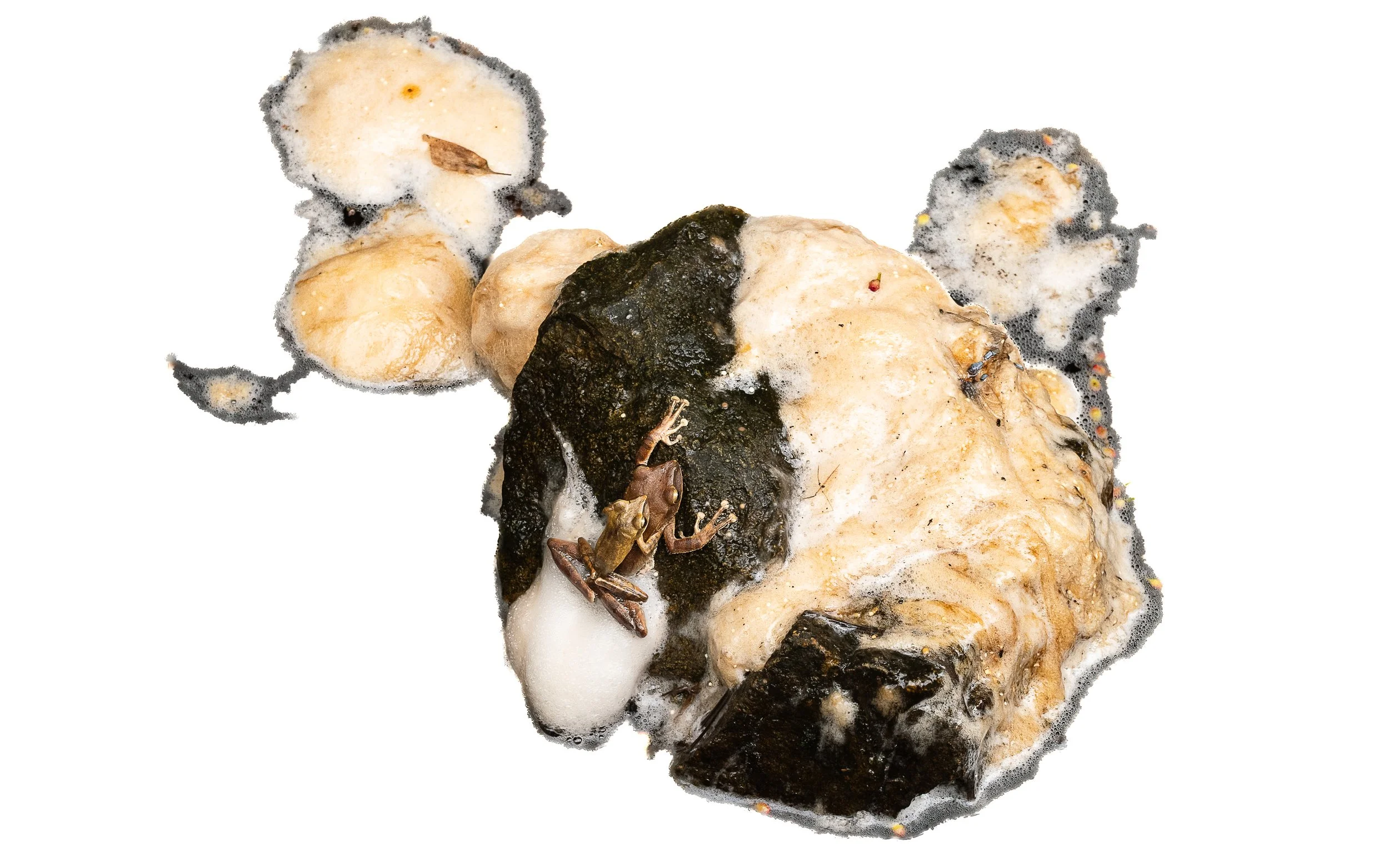
They spend their time around still or slow moving water bodies as well as catch waters where they deposit foam encased eggs in trees, overhanging rocks and catch water walls over puddles, pools, ponds and reservoirs. The foam hardens to act as a protective barrier around the eggs, then melts in heavy rain allowing the tadpoles to drop into the pools of water below. Brown tree frogs can be found in forests, villages, fields and wetlands, adapting well to many different habitats.
MISTAKEN IDENTITY
The brown tree frog is relatively unique in appearance in Hong Kong and due to its arboreal nature, is often found up in trees, which is a relatively unique behavior in Hong Kong frogs. Key distinguishing features are the large toe pads, flat triangular head, and penchant for sitting up in trees.